
A Balcony Solar Kit You Plug Into a Wall — and Its 1,200-Watt Ceiling
Verdict About $1.99 per watt of panel — $2.28 per watt its inverters deliver — against $2.60 for a contractor install. An 800-watt kit returns $184 to $258 a year, under a legal ceiling of 1,200 watts.
Prices are US list prices at the time of publication. Shipping, duties and local taxes vary by country — check with the manufacturer before ordering.
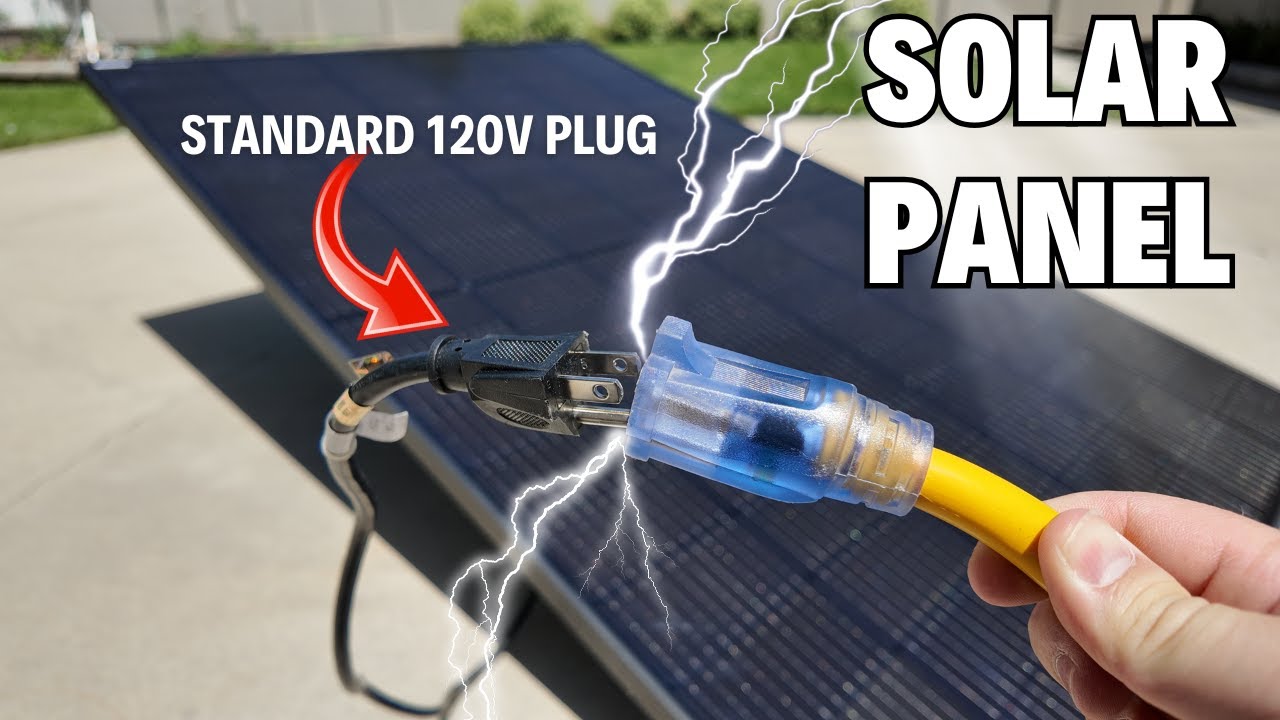
A contractor-installed rooftop solar system costs $2.60 per watt in the United States. A plug-in kit that hangs on a railing and ends in a 15-foot cord costs about $1.99 per watt, arrives in a box, and in one state needs no permit, no utility approval, and no electrician. The ceiling is what nobody advertises: Utah law caps these systems at 1,200 watts, and the 800-watt kit that fits under that cap is worth $184 to $258 a year at the US average electricity rate.
The Machine
A plug-in solar system is three parts. Panels, a grid-tied microinverter that converts DC to 120V AC and synchronizes with your house wiring, and a cord that ends in a standard three-prong plug. You hang the panels, plug the cord into an outlet, and the inverter pushes power onto the circuit. Whatever your appliances do not use flows back through the panel.
The one you can buy today is Craftstrom’s 800 Watt Eco-Line at $1,593.75, from a company based in Houston, Texas. The box holds four 200W Shield Series panels (59 × 28 × 1.5 in., 24.7 lbs each, 22% cell efficiency), two Hedy inverters rated 350W each at 120V, a Smart PowerMeter, and cables. Certification is ETL to UL 1741 and IEEE 1547 — the anti-islanding standard that makes the inverter shut down when the grid does. Ten-year warranty on panels and inverter. It ships in three to four weeks. Mounting hardware is not included.
The Numbers
The benchmark is the thing this replaces at the low end: a contractor-installed rooftop array. EnergySage’s marketplace data, updated August 7, 2026, puts the US average at $2.60 per watt before incentives — an average 12 kW system at $31,135.
| Metric | Rooftop install (contractor) | Craftstrom 800W plug-in | Source |
|---|---|---|---|
| Price as sold | $31,135 (12 kW average) | $1,593.75 (800W) | EnergySage aggregator / Craftstrom |
| Cost per watt | $2.60 | $1.99 | Our math from the row above |
| Legal size cap | None stated | 1,200W in Utah | — / Utah H.B. 340 |
| Permit / utility approval | Required | Not required in Utah | — / Utah H.B. 340 |
| Installer | Licensed contractor | The buyer, with zip ties | — / Craftstrom |
| Annual output | DATA NOT AVAILABLE FROM SOURCE | 1,000–1,400 kWh for 800W, sunny areas | — / Solar.com |
| Annual bill savings at 18.41¢ | DATA NOT AVAILABLE FROM SOURCE | $184–$258 | Our math / EIA |
| Simple payback | DATA NOT AVAILABLE FROM SOURCE | 6.2 to 8.7 years | Our math from the rows above |
| Lead time | DATA NOT AVAILABLE FROM SOURCE | 3–4 weeks | Craftstrom |
The assumptions, in the open. Electricity is the EIA’s 2026 US residential average, 18.41 cents per kWh. Production is Solar.com’s published range for an 800W system in sunny areas, which is a favorable case — a north-facing railing in Ohio is not in that range. Payback divides sticker price by annual savings and ignores incentives and degradation. And the range is quoted for 800 watts of panel: this kit’s two inverters cap instantaneous output at 700 W, which pushes real production toward the low end of that range and payback toward the long end. We did not model the rooftop system’s output: a 12 kW average tells you nothing about a specific roof. DATA NOT AVAILABLE FROM SOURCE.
The interesting number is not price per watt. It is that a 12 kW roof covers a whole house and 800 watts covers a refrigerator and not much else.
What Breaks
The legal ceiling is the product. Utah H.B. 340, effective May 7, 2025, defines a plug-in system as “a moveable photovoltaic generation device that has a maximum power output of not more than 1,200 watts” connected “through a standard 120-volt alternating current outlet.” In exchange, an electrical corporation “may not require a customer” to obtain approval, pay fees, or install additional controls. Utah was first, unanimously, and the National Caucus of Environmental Legislators counts at least 31 states weighing bills in 2026, with Virginia’s S.B. 250 already through its legislature. Everywhere without a statute, you are relying on your utility not to read your meter data closely.
Most of the market is out of stock. EcoFlow’s STREAM Microinverter — $369, 1,200W nominal, UL 1741, NEMA 6, 11 lbs — is sold out, and its plug-in installation is permitted in Utah only. The STREAM Ultra battery unit at $1,279 is sold out. US Solar Supplier’s 810W kit at $969 is sold out. The nonprofit Bright Saver sells the cheapest hardware in the country — a 360W kit at $414.17 with a $29 annual membership, $1.23 per watt all-in — but it is a pre-order expected to ship in mid-October, and it does not ship to Alaska, Hawaii, Maine, New York, or Vermont.
Vendor savings claims are rate-dependent, and the rate they assume is not yours. Bright Saver states its 360W kit “generates up to $240/yr.” Its own 180W kit is rated at “up to 270 kWh per year,” so 360W is 540 kWh — and $240 divided by 540 kWh is 44 cents per kilowatt-hour. That is a California bill. At the 18.41-cent national average, the same 540 kWh saves $99 a year, and payback on the kit plus membership stretches from under two years to about four and a half. Our math, from their two published numbers.
It is not backup power. IEEE 1547 anti-islanding means the inverter disconnects the instant the grid goes down, for the safety of the lineworker on the pole. Rocky Mountain Power told Grist in April it is concerned “some products entering the market may not meet the requirements of the bill, potentially creating electrical hazards for utility workers.” When the lights go out, a plug-in array produces nothing.
The circuit is the other cap. Bright Saver limits its kits to 360 watts because a 15-amp branch circuit only tolerates so much back-feed under the National Electrical Code — 3 amps at 120V, per pv magazine USA. Craftstrom’s kit puts roughly 5.8 amps onto whatever outlet you choose — that is the 700 watts its two inverters actually deliver, divided by 120 volts, not the 800 watts of panel on the railing. That outlet’s other loads are your problem, and Craftstrom does not ship the mount that holds 99 lbs of panel to a railing.
The inverter is the real ceiling, not the panels. The box holds 800 watts of panel and two Hedy inverters rated 350 watts each: 700 watts is what actually reaches the outlet. Divide the $1,593.75 by what it delivers and the price is $2.28 per delivered watt, not the $1.99 the panel math gives. One care with that comparison: EnergySage prices the contractor install per watt of panel too, so the like-for-like headline is $1.99 against $2.60 — and the $2.28 is what a watt at your outlet actually costs you, a number the contractor side of the table does not publish. Both of this kit’s numbers are in the table above; quote whichever one, but never against the wrong basis.
Who Should Buy This
The renter with a sunny balcony and an expensive utility, first. At California-grade rates, Bright Saver’s 360W kit turns its 540 kWh into $240 off the bill and pays for itself in under two years; the Craftstrom 800W kit at $1,593.75 needs 6.2 to 8.7 years at the national average. Unlike a roof array, either one comes with you when the lease ends. Assumptions: exposure toward the equator — south-facing in the US — a landlord who does not object, and a state that has not made this an argument.
The homeowner who wants solar and cannot finance $31,135, second. Eight hundred watts is not a solar system; it is a down payment on the habit. At $184 to $258 a year it will not change your life, but you can buy it on a Saturday, install it by Sunday, and unbolt it when you move.
Not for: anyone who needs power during an outage — this is the wrong machine, categorically. Not for households in cheap-power states, where a lower rate shrinks the same kilowatt-hours and stretches payback well past a decade. Not for anyone who wants to offset a whole house; the law will not let a plug-in system get there. And not for renters in states with no statute, where the honest answer about legality is that nobody has tested it yet.
The Stack
No affiliate links in this issue. When a link earns us a commission, we always say so. Verdicts are never for sale.
If you want plug-in solar working this quarter, Craftstrom’s 800W Eco-Line at $1,593.75 is the one with an active add-to-cart button and a three-to-four week lead time. Budget separately for a mounting system it does not include.
If you want the cheapest watts and can wait, Bright Saver’s 360W kit at $414.17 plus a $29 membership is $1.23 per watt — the lowest price per watt we found anywhere in the US market. It ships in mid-October, and not to five states.
If you live in Utah and want the 1,200W legal maximum in one device, the EcoFlow STREAM Microinverter at $369 is the part to watch. It is sold out today. Bring your own panels.
We earn nothing if you buy any of these. That is how you know the numbers above are straight.
Correction, 2026-08-24: this report previously said the kit puts roughly 6.7 amps on the outlet — that is the panel math; its inverters deliver 700 W, which is 5.8 A — and headlined “about $2.00 a watt”. The verdict now carries both honest prices with their subjects: $1.99 per watt of panel, $2.28 per watt delivered.
Correction, 2026-08-26: the renter paragraph credited “the hardware” with a two-year payback without naming which kit. Those two years are Bright Saver’s 360W kit at California rates; the Craftstrom 800W that this report is about needs 6.2 to 8.7 years at the national average — the figure its own table and math block already carried. Both kits are now named. No number changed.
One machine. All the numbers.
Mondays and Thursdays in your inbox. Free, no spam.